Meeting Kids and Families Where They Are
A Partnership That Strengthens Prevention
As Executive Director of the Children’s Advocacy Center of Hampshire County, Kara has worked with the Children’s Trust to build a child sexual abuse prevention program tailored to the rural communities she serves.
Located in western Massachusetts, Hampshire County is one of the Commonwealth’s most rural counties, with a population of about 160,000 people over 527 square miles. For Kara McElhone, the Executive Director of the Children’s Advocacy Center of Hampshire County, that bucolic nature comes with many strengths. But she also finds that serving numerous small towns with a lot of distance between them means access to resources can be limited — especially when it comes to child sexual abuse prevention.
To overcome that challenge, Kara and her team worked with the Children’s Trust to create a child sexual abuse prevention program that is now in nearly every school district in the county. “That means we’re not just training adults, but we’re also working directly with kids,” Kara says, adding that they focus on topics such as online safety, healthy relationships, and consent.
The team starts those discussions early, with age-appropriate conversations, and returns year after year to build on that foundation as the students grow. They also introduced a peer-to-peer model where high school students help to lead conversations with younger students.
“Because as much as adults try, we all know… kids don’t always want to hear it from us, but they will listen to each other,” Kara says. “And what we’ve seen is that when those conversations are led by peers, they feel more real and more relevant. And they open the door to talking about things that can be really hard to talk about.”
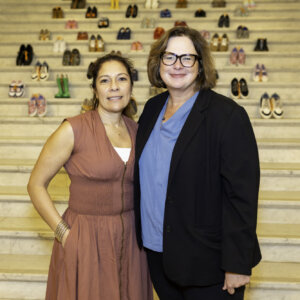
Kara McElhone, the Executive Director of the Children’s Advocacy Center of Hampshire County
The prevention team works closely with the Center’s clinical team so if something comes up – as it often does – they can respond holistically in the moment and make sure kids are supported. Both teams have seen that when they provide young people with the language to talk about safety, relationships, and what doesn’t feel right, they use it. Kids have been reaching out to trusted adults, showing that the Center’s prevention approach is working the way it’s intended.
“This kind of work doesn’t happen with a single visit, or a one-time program. It’s about relationships and consistency,” Kara says. “It’s about showing up and building trust with schools, with educators, and with students over time so that when we walk into a classroom, we’re not strangers. We’re part of a broader network of support around each child in that school. And that’s really what prevention looks like in practice. It’s steady, it’s relational, and it’s built over time.
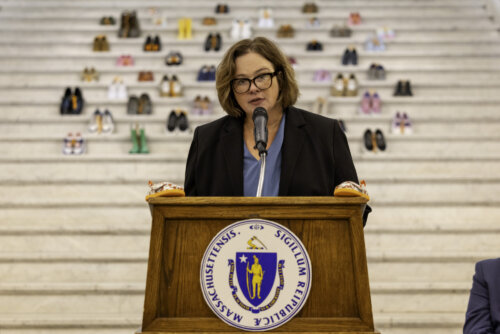
Kara McElhone, the Executive Director of the Children’s Advocacy Center of Hampshire County
“This work is strongest when it’s connected and collaborative, and when schools, community organizations, clinicians, law enforcement, child welfare services, and policymakers are all working together, each bringing their piece to the table,” Kara adds. “In our community, that’s what we’ve been able to build. I don’t take that for granted because I know that without that kind of support and collaboration, we would not be reaching as many kids as we are today.”