
Safe Kids Thrive Learning Cohort Builds Stronger Prevention Systems
How the Safe Kids Thrive Learning Cohort Is Building Stronger Prevention Systems
Every child deserves to learn and play in environments where they are safe, supported, and protected from child sexual abuse. Child sexual abuse is preventable when youth-serving organizations proactively build prevention into the way they operate every day. When organizations strengthen their systems, children, families, and entire communities benefit.
That belief is at the heart of Safe Kids Thrive, the Children’s Trust’s initiative that equips youth-serving organizations with free tools, training, and resources to help prevent child sexual abuse before it occurs.
To further advance that work, the Children’s Trust launched the inaugural Safe Kids Thrive Learning Cohort, a pilot program designed to help organizations transform the 8 Elements of Prevention into lasting organizational change.
With support from the Massachusetts Executive Office of Health and Human Services (EOHHS) in identifying potential participants, the cohort brought together three organizations from across the Commonwealth — Inquilinos Boricuas en Acción (IBA), the Vietnamese American Civic Association (VACA), and 18 Degrees. Over six months, participants met as a group at the beginning, middle, and end of the cohort to learn from one another, share experiences, and work collaboratively. Between those sessions, each organization received individualized technical assistance from the Children’s Trust to assess its existing practices, identify areas for growth, and develop proactive plans to strengthen its child sexual abuse prevention policies and procedures.
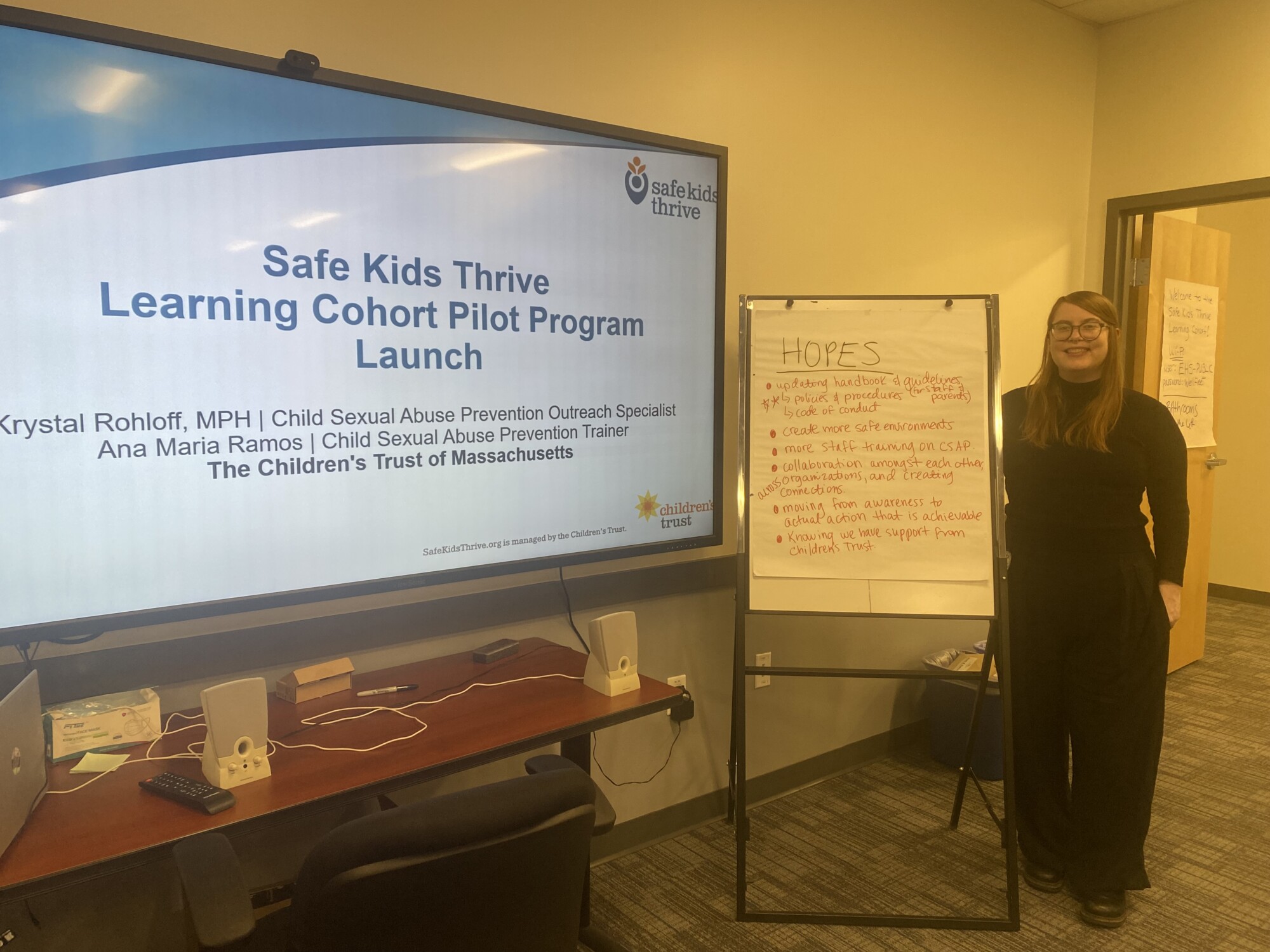
One of the pilot’s most important lessons was that effective prevention cannot happen in isolation. While the Cohort’s initial plan was to focus on a single area of the 8 Elements of Prevention, participants found that strengthening one part of their prevention system naturally reinforced the others.
By the end of the Cohort, each organization had made meaningful progress across multiple elements, demonstrating the interconnectedness of strong prevention systems. Rather than treating prevention as a checklist, the Cohort helped participants embed child safety into leadership, policies, staff practices, and organizational culture.
This systems-based approach creates ripple effects that extend far beyond a single organization. Stronger policies, clearer expectations, and ongoing staff training help create safer environments for children while building a shared culture of accountability and prevention. As organizations strengthen these systems, families gain greater confidence in the places where their children learn, play, and grow – and communities become stronger as prevention becomes everyone’s responsibility.
As the Children’s Trust continues to refine and expand the Learning Cohort, the goal remains the same: helping more organizations build sustainable prevention systems that protect children and strengthen communities across Massachusetts.
By combining evidence-informed practices, strong partnerships, and continuous learning, the Safe Kids Thrive Learning Cohort demonstrates how lasting systems change can create safer communities where children and families can thrive.
Interested in strengthening your organization’s child sexual abuse prevention efforts?
Learn more about Safe Kids Thrive and contact the Children’s Trust to express your interest in future Learning Cohorts or individualized technical assistance.