Overview

We are preventing child abuse and neglect by addressing its root causes and strengthening systems so that families get the support they need before they reach the point of crisis.

The Foundation of Family Wellbeing

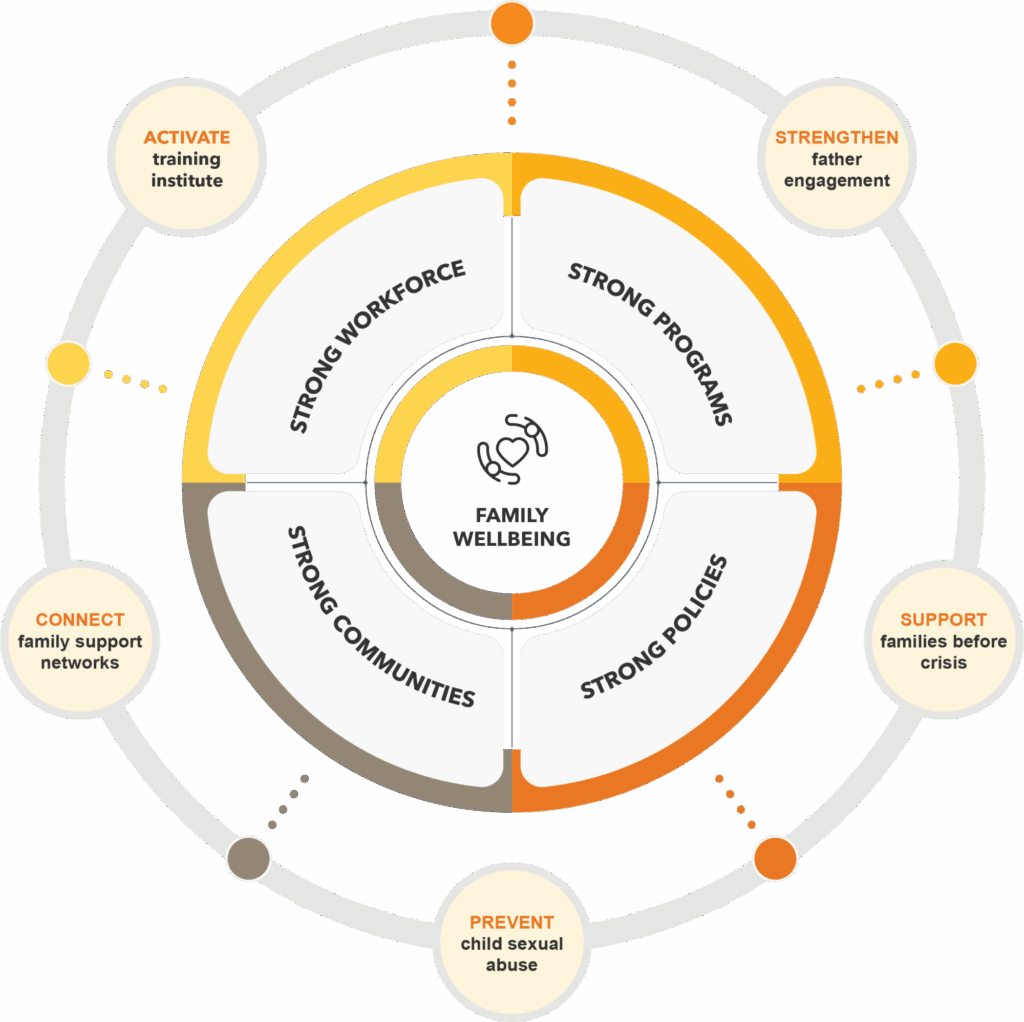
For all families to thrive, Massachusetts needs strong programs, a strong workforce, strong policies, and strong communities. These are the pillars that form the foundation for family wellbeing. When these systems work together in ways that center families and address root causes of child abuse and neglect, such as mental health challenges and economic insecurity, families get the support they need to keep kids safe.

Interconnected Priority Areas

Preventing child abuse and neglect is complex, and meaningful change requires strategies that can evolve with families’ needs and experiences. To meet those changing needs, we are focusing our efforts on systemic change and have identified five interconnected priority areas on which to focus to drive transformational, long-term impact:

  • Activate a training institute to support and strengthen the family support workforce
  • Strengthen father engagement so that fathers play a meaningful role in their children’s lives, improving long-term outcomes for children
  • Connect family support networks to promote efficiency and provide opportunities for learning and advancing together
  • Prevent child sexual abuse through education, policy, and community-based approaches
  • Support families before crisis by changing culture and policy so that support is the first intervention

By focusing on these five interconnected priorities, we are building a future where families are strong, children are safe, and every community is equipped to help families thrive.

Examples of Our Systems Change Work

A group of elementary school kids are outside on a summer day. They are embracing and smiling while taking a group photo.
  • We are leading conversations with home visiting providers across the Commonwealth to better align programs and resources so that the experience is seamless, consistent, and supportive for families.
  • We are convening policymakers and service providers to shift culture and policy from one that requires reporting to one that prioritizes support for families on the verge of crisis.
  • We have partnered with the Hampshire County Jail and House of Corrections to offer a parenting support program for incarcerated fathers and fathers in their community. Since the partnership began, more than 150 fathers have graduated from the program, and of the 99 who took the course while incarcerated, only three have returned to the Hampshire County Jail and House of Correction, a remarkable success rate.